
Why Do Condition-Based Searches Matter for Naturopath SEO?
Sep 22, 2026


Getting website traffic is a positive sign for any naturopathic practice. It means people are discovering your website through search engines, educational content, local listings, or other online channels. But what happens when hundreds of people visit your website and only a few contact your practice?
This is a common challenge for naturopaths. A website can rank for relevant searches and still generate disappointing numbers of calls, appointment requests, and consultation inquiries.
The problem is often not traffic itself. It is the gap between visibility and conversion.
A successful website needs to attract the right visitors, answer their questions, establish trust, and make the next step obvious. This is where a strategic approach to Naturopaths SEO becomes important.
Website traffic is only one part of digital growth. A visitor searching for general information about natural health may not be ready to schedule an appointment. Someone searching for a naturopath in their city, however, may have much stronger intent.
For example, compare these searches:
The first two searches are primarily informational. The others indicate stronger commercial or appointment-related intent.
If your website attracts mostly broad informational traffic, your analytics may look impressive while your appointment numbers remain low.
This is why effective Naturopaths SEO Services should focus not simply on increasing visits but on attracting people who are more likely to become patients.
One of the biggest reasons naturopath websites receive traffic without generating leads is a mismatch between content and visitor intent.
Imagine someone searches for “naturopath near me.” They are probably looking for a local practitioner, service details, reviews, location information, availability, or a way to make contact.
If they land on a 2,000-word educational article with no obvious appointment option, they may leave—even if the article is excellent.
Your website should provide different content for different stages of the patient journey.
These visitors are researching a topic. Helpful blog posts, educational guides, and FAQs can answer their questions and introduce your expertise.
These users are comparing providers or services. Service pages, testimonials, practitioner information, pricing guidance, and treatment details can help them make a decision.
These visitors may be ready to contact a practice. Location pages, appointment information, phone numbers, contact forms, and strong calls to action become especially important.
A strong SEO strategy connects each search intent with the right page.
For more information on attracting qualified visitors, explore targeted SEO strategies for naturopaths.
A visitor should never have to wonder what to do next.
Many naturopath websites provide useful information but bury their contact options at the bottom of the page. Others use vague phrases such as “Learn More” instead of action-focused messaging.
Consider using clear CTAs such as:
The CTA should also match the page.
A service page can encourage visitors to schedule a consultation. A blog article might encourage them to explore a relevant service or contact the practice for personalized guidance.
Ready to attract more qualified visitors and turn website traffic into real appointment opportunities?
Get Started With Naturopaths SEO Services
Healthcare decisions require trust. Before contacting a naturopath, potential patients may want to know who is providing care, what the practice specializes in, where it is located, and whether other people have had positive experiences.
If your website lacks trust signals, visitors may hesitate.
Important trust elements can include:
Trust is especially important for local practices because patients are often comparing several providers before making contact.
Learn more about how Naturopaths SEO Services can build trust and recognition while strengthening your online presence.
A naturopath may receive visitors from across the country but still struggle to attract patients from the surrounding community.
For most practices, local visibility matters.
Potential patients often search phrases such as:
Your website should clearly communicate where you serve patients.
This includes optimizing location pages, maintaining accurate business information, strengthening local signals, and ensuring your practice information is consistent across relevant platforms.
A dedicated local SEO strategy can help connect your website with people who are actually able to visit your practice.
You can also learn more from this guide to local SEO essentials for naturopathic clinics.
A homepage alone cannot effectively answer every question a potential patient may have.
If your practice provides several services, each important service should have a dedicated, useful page.
For example, instead of placing everything under a generic “Services” section, consider individual pages that explain:
Dedicated service pages can also target more specific searches.
Someone searching for a particular naturopathic service should ideally land on a page specifically addressing that need—not a generic homepage.
Content marketing can bring significant organic traffic, but a blog should have a purpose beyond ranking for keywords.
A useful article should answer the visitor’s question while naturally guiding them toward the next relevant resource.
For example, an article about digestive wellness could link to a related service page. An article about naturopathic consultations could encourage readers to schedule an appointment.
This creates a logical journey:
Search → Helpful Content → Relevant Service → Trust → Contact → Appointment
High-quality content can also strengthen topical authority and demonstrate your expertise. Explore how quality content can improve SEO for natural health experts for additional guidance.
Even highly motivated visitors can leave if your website is difficult to use.
Common problems include:
Most prospective patients will not spend several minutes trying to figure out how to contact a practice.
Make the process simple.
Your phone number should be easy to find. Your contact form should be straightforward. Your appointment button should stand out. Important service information should not be buried beneath unnecessary content.
Traffic is easy to celebrate because it is visible in analytics. But traffic alone does not tell you whether your SEO investment is producing business results.
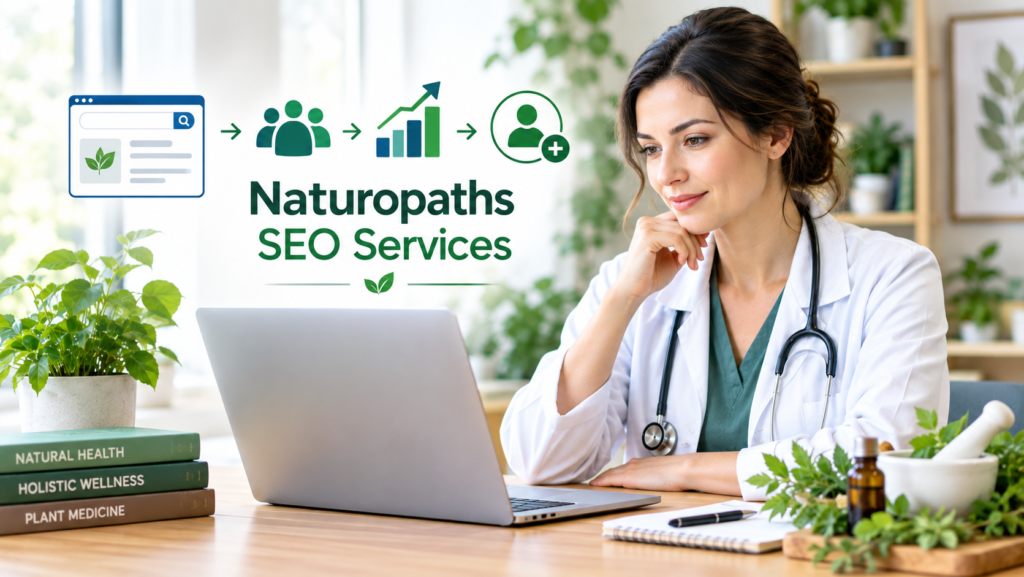
A better approach is to monitor metrics such as:
This changes the question from “How much traffic did we get?” to “How many qualified opportunities did our website generate?”
That distinction is critical for a service-based healthcare practice.
Professional Naturopaths SEO Services should connect visibility with business objectives.
Instead of focusing exclusively on rankings, a conversion-focused strategy can address the complete patient journey.
This may include:
Identify the terms potential patients use when researching services, practitioners, conditions, and local providers.
Improve your visibility for location-based searches and help your practice reach nearby prospective patients.
Improve page titles, headings, content structure, internal linking, service pages, and other on-site elements.
Create useful content that addresses genuine patient questions while supporting your important services and locations.
Resolve issues involving site speed, mobile usability, indexing, navigation, and technical performance.
Improve calls to action, contact pathways, service pages, trust elements, and appointment opportunities.
Measure whether increased visibility is actually contributing to inquiries and practice growth.
The goal is not simply to make your website busier. The goal is to make it more effective.
For additional insights, see how Naturopaths SEO Services can increase patient inquiries.
A naturopath website can receive plenty of visitors and still struggle to generate leads if those visitors have low intent, cannot find relevant information, do not trust the practice, or cannot easily take the next step.
The solution is to connect SEO, content, local visibility, user experience, and conversion strategy.
Your website should answer three questions quickly:
Am I in the right place?
Can I trust this practice?
What should I do next?
When your website answers those questions clearly, organic traffic has a much better chance of becoming genuine patient inquiries.
If your naturopath website is attracting visitors but not producing enough calls, forms, or appointment requests, it may be time to look beyond rankings and evaluate the entire conversion journey.
Professional Naturopaths SEO Services for local practice growth can help identify missed opportunities, improve your search visibility, and build a website experience designed around qualified patient inquiries.
CTA Button: Get Started With Naturopaths SEO Services
Traffic does not automatically translate into inquiries. Your visitors may have low search intent, weak trust signals, unclear calls to action, poor local targeting, or difficulty navigating your website. Improving these areas can help turn more visitors into prospective patients.
Focus on high-intent keywords, local SEO, dedicated service pages, strong calls to action, trust-building content, mobile usability, and simple contact options. Your website should make it easy for qualified visitors to understand your services and take the next step.
Yes. A well-planned Naturopaths SEO strategy can improve visibility for relevant searches and help attract more qualified visitors. When SEO is combined with conversion-focused website improvements, those visitors have a stronger opportunity to become inquiries and appointments.
Most naturopathic practices serve specific geographic areas. Local SEO helps your practice become more visible when potential patients search for naturopaths and related services in their city or nearby area.
Important services generally benefit from dedicated pages. A focused service page can provide detailed information, target specific search intent, answer patient questions, and give visitors a clear path toward contacting your practice.
CTAs are essential because they tell visitors what to do next. A clear “Book a Consultation,” “Request an Appointment,” or “Contact Our Practice” button can reduce friction and make it easier for motivated visitors to take action.
SEO results vary depending on competition, website quality, location, authority, content, and the current state of the website. SEO is generally a long-term strategy, so consistent optimization and performance tracking are important for sustainable growth.