
Why Do Naturopath Websites Get Traffic but Few Leads?
Sep 30, 2026


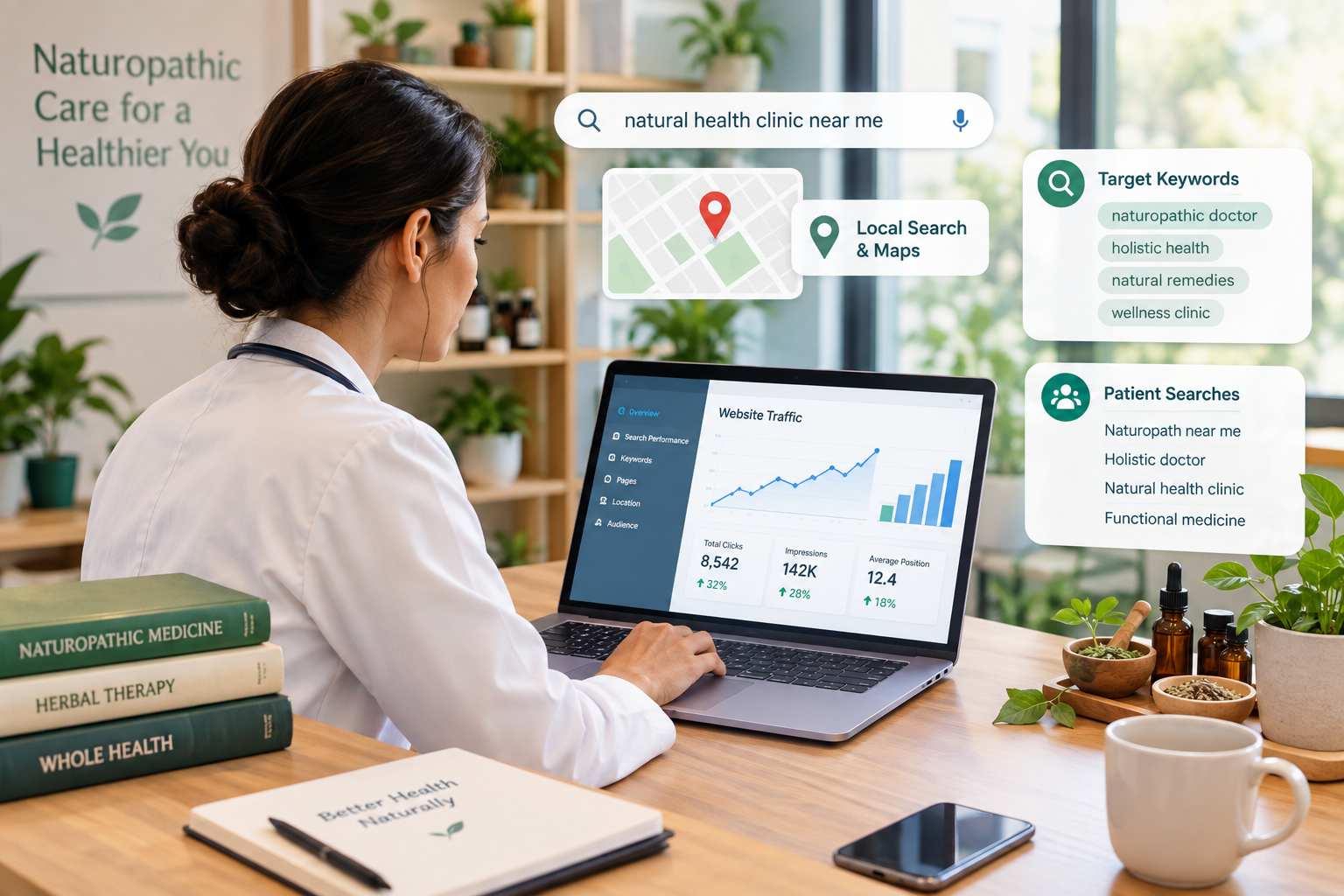
When people begin looking for naturopathic care, they do not always search for a practitioner by name. Many start with a health concern, symptom, or condition they want to understand. Searches such as “naturopath for digestive issues,” “natural support for hormonal health,” or “naturopath for chronic fatigue” reveal something important: the person is searching for a solution, not simply a business.
This is why condition-based searches deserve an important place in a modern Naturopaths SEO strategy.
A naturopathic practice that only targets broad phrases such as “naturopath near me” or “naturopathic clinic” may miss potential patients who begin their journey by researching a specific concern. Condition-focused content allows your website to become visible earlier in that journey, answer meaningful questions, demonstrate relevant expertise, and eventually guide visitors toward a consultation.
Effective SEO for naturopaths should therefore connect what patients search for with the services and expertise your practice actually provides. A specialized approach can help build that connection through professional Naturopaths SEO Services.
Condition-based searches are queries centered around a health concern, symptom, or condition rather than a provider or location.
For example, a potential patient might search:
These searches can indicate a strong need. The person may not know which practitioner to choose yet, but they have already identified the problem they want help addressing.
For a naturopathic practice, this creates an opportunity to provide useful educational information while introducing relevant services.
Condition-based SEO should never mean making unsupported medical claims or promising specific outcomes. Instead, the content should explain what naturopathic care may involve, identify appropriate questions to discuss with a qualified practitioner, and clearly communicate the scope of the practice.
People do not always know the professional terminology associated with the care they need.
Someone experiencing digestive discomfort may not immediately search for a naturopath. They may first search for information about digestion, nutritional support, gut health, or possible lifestyle approaches.
Likewise, someone researching persistent fatigue may initially search for information about possible causes or supportive wellness strategies.
By creating helpful resources around relevant conditions and concerns, your website can become part of that initial research process.
This broader visibility is one reason targeted SEO strategies for naturopaths can be valuable. Rather than targeting every possible keyword, the goal is to identify searches that align with your services, location, expertise, and ideal patient audience.
Not every website visitor has the same objective.
Someone searching “what is naturopathy?” may simply be researching the profession. Another person searching “naturopath for digestive health in Austin” has a much clearer purpose.
Condition-based queries can sit at different stages of the patient journey.
Early-stage searches may include:
Consideration-stage searches may include:
Local or appointment-focused searches may include:
A strong SEO strategy creates content for these different stages instead of expecting one service page to answer every question.
Condition-based searches can also influence your website structure.
Suppose your practice provides several areas of care. Rather than placing everything on one generic services page, you can develop clear, useful pages around appropriate areas of specialization.
For example:
Each page should have a clear purpose and provide genuinely useful information.
This approach also supports on-page SEO for naturopath websites, where headings, page structure, content relevance, internal links, and keyword targeting work together to help search engines understand the subject of each page.
Condition-Based Content Can Strengthen Local Visibility
Condition-based SEO becomes even more valuable when combined with local intent.
Imagine two searches:
“Naturopath for digestive health”
and
“Naturopath for digestive health in Denver.”
The second query provides a stronger geographic signal. It tells search engines that the user is looking for a relevant provider in a particular area.
Your content can naturally incorporate location information where appropriate, such as:
This works alongside broader local SEO efforts. A well-optimized Google Business Profile, consistent business information, genuine reviews, and relevant location pages can all support your local presence.
As discussed in Local SEO strategies for naturopaths, local visibility is especially important because naturopathic practices generally serve defined geographic communities.
Instead of choosing conditions simply because they have high search volume, consider the questions your prospective patients actually ask.
Review:
These insights can produce content that is much more useful than generic keyword lists.
The format of your page should reflect what the person wants.
If the query is informational, provide a thorough educational article.
If the query is service-oriented, create a dedicated service page.
If the query includes a location, make the local relevance clear.
If the visitor appears ready to take action, make appointment information easy to find.
This intent-focused approach is more effective than simply repeating a keyword throughout an article.
Healthcare content requires particular care.
Condition-focused pages should avoid exaggerated claims, guaranteed results, sensational language, or statements suggesting that naturopathic care replaces necessary medical treatment.
Instead, explain:
Helpful content can build trust while maintaining professional boundaries.
One of the biggest advantages of this strategy is that it does not depend entirely on immediate conversions.
A person might discover your article through a condition-related search today, read another page next week, review your practitioner information later, and eventually schedule a consultation.
That means SEO should create a connected journey.
A condition-based article can link to:
This internal structure helps visitors discover more relevant information while giving search engines clearer signals about the relationships between your pages.
Strong content is particularly useful when supported by high-quality SEO content for natural health experts, because educational resources can establish topical depth around the areas your practice serves.
Developing condition-based content is more than adding a few keywords to blog posts.
A comprehensive strategy may involve:
This is where specialized Naturopaths SEO Services can provide value. A naturopathic website has different content considerations from a general local business, particularly when creating health-related educational resources.
Broad keywords can be highly competitive.
A phrase such as “naturopath” is extremely broad. A longer query such as “naturopath for digestive health in [city]” is more specific.
Long-tail searches can help you reach users with a clearer need because they contain more context.
For example:
Broad:
“Naturopath”
More specific:
“Naturopath for digestive health”
Local and specific:
“Naturopath for digestive health in [city]”
The objective is not to target every variation imaginable. Instead, identify meaningful search themes that match your actual services and audience.
Condition-based visibility is only useful if visitors can easily take the next step.
If your website is attracting people researching concerns that your practice supports, make your next action clear.
Get Started With Naturopaths SEO
Professional Naturopaths SEO Services can help your practice build a search strategy around relevant patient questions, condition-based topics, local intent, and conversion opportunities.
Explore Naturopaths SEO Services to learn how a focused SEO strategy can help your practice become easier to discover and connect with prospective patients searching for the services you provide.
Condition-based searches are queries focused on a health concern, symptom, or condition rather than simply searching for a naturopath. Examples include “naturopath for digestive health” or “naturopath for stress support.”
They can help practices reach people who are actively researching a specific concern. These searches may introduce potential patients to your website before they have selected a practitioner.
No. Create dedicated pages only for conditions or areas of care that are genuinely relevant to your practice. Each page should provide substantial, useful information rather than existing solely to target a keyword.
Adding relevant geographic intent can connect condition-related searches with your service area. For example, a practice may target searches such as “naturopath for digestive health in [city]” when that service is genuinely offered locally.
Yes, useful condition-focused content can attract visitors earlier in the research process. Clear service information, internal links, contact options, and appointment CTAs can then help guide relevant visitors toward taking the next step.
Avoid unsupported medical claims, guaranteed outcomes, misleading statements, keyword stuffing, and content created solely for search engines. Health content should be accurate, useful, responsible, and aligned with the services your practice actually provides.
No. They complement them. A strong Naturopaths SEO strategy can target provider-focused, service-focused, condition-focused, informational, and local searches to reach people at different stages of the decision-making process.
Specialized SEO services can research relevant search themes, map keywords to appropriate pages, optimize content, strengthen internal linking, improve local signals, and monitor performance so the strategy can evolve based on actual search behavior.
Condition-based searches matter because patients do not always begin their online journey by searching for a naturopath. Often, they begin with a question, symptom, concern, or health goal.
By creating useful content that addresses those searches—and connecting that content to relevant services and local information—your practice can become visible earlier in the decision-making journey.
The most effective approach is not to chase every health-related keyword. It is to build a focused content ecosystem around the concerns your practice genuinely serves, provide trustworthy information, and make it easy for local visitors to take the next step.
That combination makes condition-based targeting an important component of a thoughtful Naturopaths SEO strategy and a valuable part of long-term Naturopaths SEO Services.